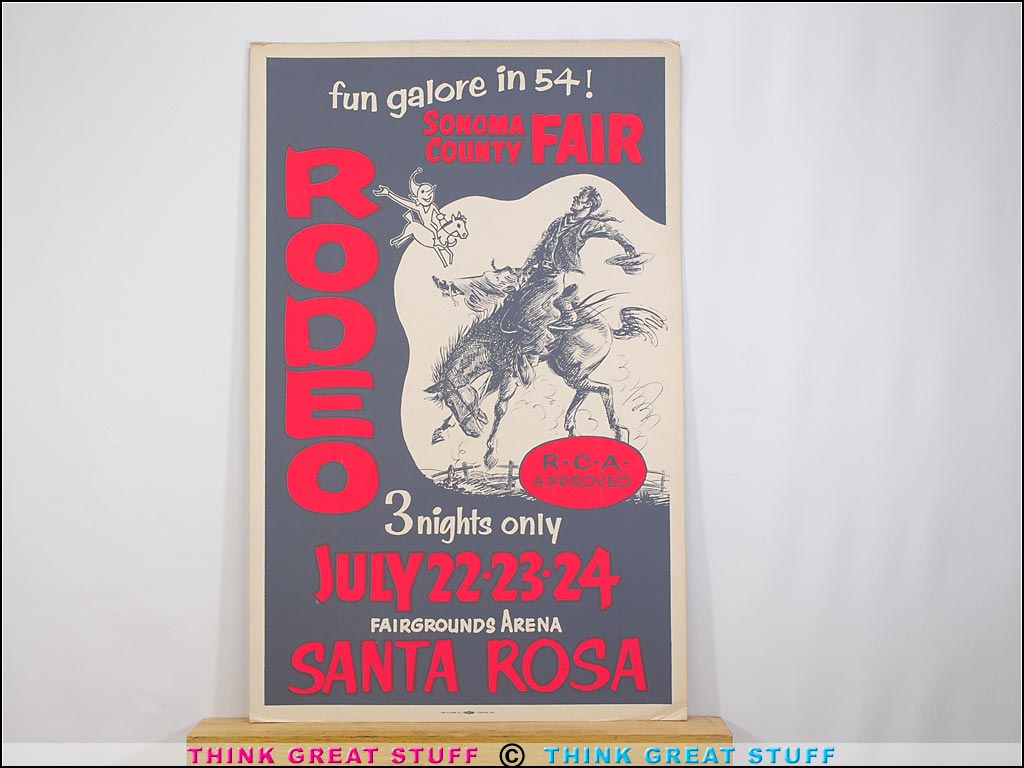



70+ years old, Original 1954 fluorescent DayGlo rodeo poster for the Sonoma County Fair, Santa Rosa, printed by Larry E. Klump Co., Stockton. Silkscreen and lithography, 14 x 22 inches.
Wonderful western Americana, the text reads: “Fun galore in 54! Sonoma County Fair RODEO, R.C.A. Approved, 3 nights only, July 22, 23, 24, Fairgrounds Arena Santa Rosa” (California).
Authentic 1950s vintage advertising art, the rodeo graphics include a cowboy jostled on a wild bucking bronco horse, the man flailing with hat in hand, and a smaller cute elf-like character on his cartoon-like horse, arm outstretched for balance.
Perhaps also a subtle and understated theme of “cowboy queer” culture. While elves are not an official, historically recognized symbol of the LGBTQ+ community like the rainbow flag or the pink triangle, they have a powerful and deeply rooted association with gender non-conformity and queer culture in fantasy fandoms and literature.
~
Rare to find any poster from the 1950s that was printed using DayGlo inks, and, likely one of a kind, a rodeo poster featuring an adorable elf on horseback — the norm being exclusively macho cowboy themed.
Printed using two spot-colors, gray ink and pinkish-red DayGlo ink. The DayGlo color is hard to describe — not red, not pink, not magenta — looking at online swatches of DayGlo inks, it looks to have been printed using DayGlo Neon Red.
Printed on card stock, this antique poster measures 14 inches wide by 22 inches tall, cardstock caliper reading is 0.030 inches thick. Corners have some minor creasing but it has never been bent or folded. Printed small at bottom/center on the front: Larry E. Klump Co. Stockton Calif.
~
On printing methods: DayGlo inks were initially only offered to hand-painters (for signs) and screen printers, so some 1950s posters were produced using a combination of offset lithography and screen printing (silkscreen, also called serigraphy). This technique was highly effective for adding vibrant, opaque, or fluorescent colors that lithography could not achieve.
So too this 1954 rodeo poster. The gray ink was printed using lithography, while the DayGlo ink was screenprinted — note in the closeup photos the very large trapping “spread” done to accommodate the cardstock moving between two such different processes, and the “pooling” of the DayGlo ink along its edges.
~
About DayGlo®: Robert and Joseph Switzer of Berkeley, California began investigating fluorescence in the 1930s using a black light to identify naturally occurring fluorescent compounds. The brothers established the Fluor-S-Art Co. in 1934 to develop and sell black light paints for advertising purposes. In the 1940s, they began developing a new class of pigments that fluoresced in daylight, these daylight fluorescing pigments are known as DayGlo. During World War II they were used extensively by the U.S. military, including painting military aircraft and supplying troops with fluorescent fabrics to ensure visibility and safety. After the war, the brothers continued developing and marketing new uses for fluorescent materials. In advertising use, Tide detergent became known for its fluorescent packaging beginning around 1959. DayGlo pigments became a cultural icon in the late-1960s due to their extensive use in psychedelic art and culture. [Wikipedia]
And finally: Were you married in 1954 ? This would make a lovely unique wedding anniversary gift. Was a loved one born in 1954 ? A wonderful birthday present — especially so if they were born on July 22, 23, or 24, 1954.